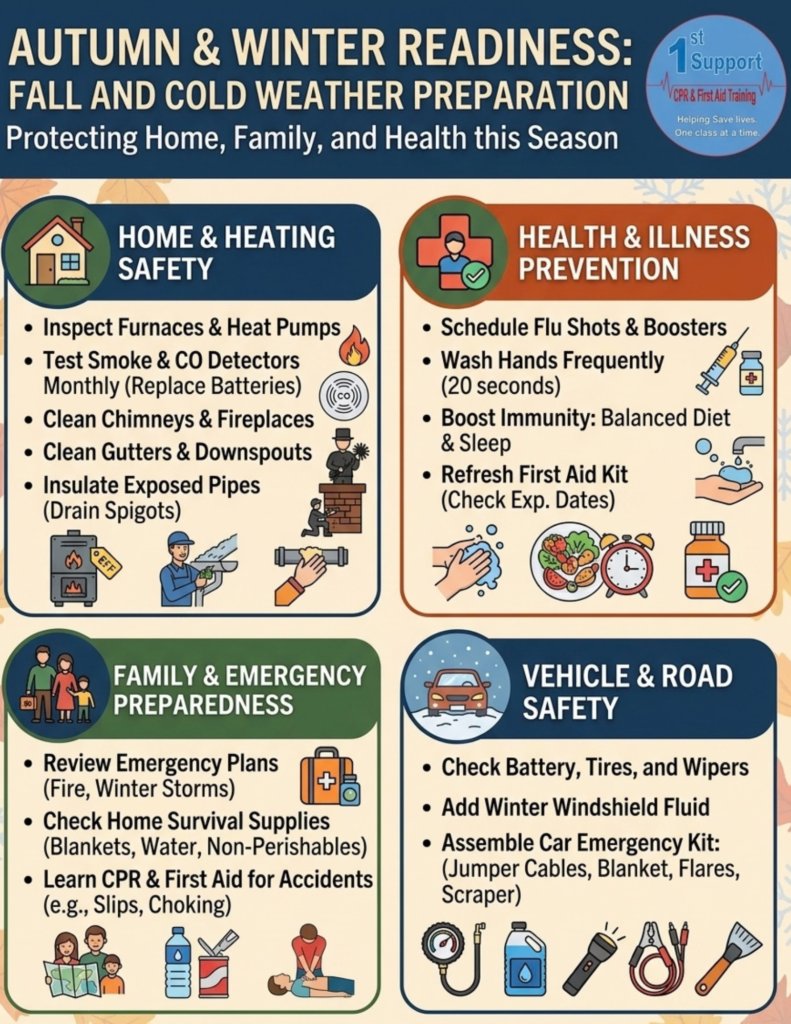
As temperatures drop and the autumn breeze sets in, preparing for the colder months becomes essential. Cold weather brings unique health risks, home maintenance needs, and safety challenges—from seasonal illnesses to slippery walkways and indoor hazards. Taking a proactive approach during early fall ensures your home stays safe, your family remains healthy, and you are prepared for seasonal emergencies.
1. Seasonal Health & Illness Prevention
Colder weather often keeps people indoors, where viruses spread more easily. Flu season peak coincides with late autumn and winter, making health precautions a top priority.
Immune Support: Prioritize balanced nutrition, regular exercise, adequate sleep, and hydration.
Stay Up to Date on Vaccinations: Consult your healthcare provider regarding annual flu shots and recommended seasonal boosters.
Hand Hygiene: Encourage frequent handwashing with warm water and soap for at least 20 seconds to prevent the spread of respiratory germs.
First Aid Kit Refresh: Check expiration dates on over-the-counter cold medicines, fever reducers, throat lozenges, and basic first aid supplies.
2. Home & Heating Safety Checks
Heating equipment is one of the leading causes of home fires during winter months. A few maintenance checks around your home can prevent costly repairs and dangerous hazards.
Inspect Heating Systems: Have furnaces, boilers, and heat pumps serviced by a professional before turning them on for the season. Clean or replace air filters regularly.
Test Smoke and Carbon Monoxide Detectors: Fuel-burning appliances and fireplaces increase the risk of carbon monoxide (CO) poisoning. Test detectors monthly and replace batteries annually.
Fireplace & Chimney Maintenance: Schedule an annual chimney sweep to remove creosote buildup before lighting your first fire.
Space Heater Safety: Keep portable heaters at least 3 feet away from flammable items (curtains, bedding, furniture). Never plug space heaters into extension cords or power strips; plug them directly into wall outlets.
3. Winterising Your Property & Outbuildings
Protecting your exterior home structures prevents winter freeze damage and outdoor hazards.
Clear Gutters and Downspouts: Remove leaves and debris to ensure rainwater flows freely, preventing ice dams and water intrusion along your roofline.
Drain Exterior Faucets & Hoses: Disconnect garden hoses, drain remaining water, and insulate outdoor spigots using free
Draftproofing: Install weather stripping around doors and windows to keep heat in and reduce utility costs.
Trim Tree Branches: Cut back dead or overhanging limbs that could snap under heavy ice or wind, threatening roof structures or power lines.
4. Vehicle & Emergency Roadside Preparation
Cold weather impacts vehicle performance, battery health, and tire pressure. Preparing your car early ensures you aren’t stranded during sudden inclement weather.
Check Vehicle Fluids & Battery: Cold temperatures drop battery power significantly. Have your battery tested and top off windshield washer fluid with a winter formula that resists freezing.
Inspect Tires: Ensure tires have adequate tread depth and maintain correct inflation levels, as air pressure drops naturally in colder air.
Assemble an Auto Emergency Kit: Keep a dedicated winter safety kit in your trunk containing:
Blanket and warm clothing (gloves, hats)
Ice scraper and snow brush
Flashlight with fresh batteries
Jumper cables
Portable power bank for mobile phones
Non-perishable snacks and bottled water
5. First Aid & Safety
Preparedness in Cold Weather
Cold weather increases the risk of hypothermia, frostbite, slipping accidents, and indoor medical emergencies. Knowing how to recognize and respond to these situations is crucial.
Recognizing Cold Exposure:
Frostbite: Look for numbness, loss of feeling, and pale, waxy, or hard skin (commonly affecting fingers, toes, nose, and ears). Move the individual indoors and warm the affected area gently with warm (not hot) water.
Hypothermia: Symptoms include uncontrollable shivering, slurred speech, confusion, and lethargy. Call 911 immediately, cover the person with dry blankets, and provide warm, non-alcoholic liquids if conscious.
Keep CPR & First Aid Skills Sharp: Emergency response times can slow down during severe weather events like ice or snowstorms. Being certified in CPR and basic first aid empowers you to care for family members or neighbors until help arrives.
Is your household ready for the cold weather season? Make emergency preparedness a priority this autumn. Contact First Support CPR at info@firstsupportcpr.com or browse our schedule to take or renew your CPR and First Aid certifications today!