Every Second Counts: Why the Restart a Heart Campaign Matters More Than Ever

Imagine a family member, a colleague, or a complete stranger suddenly collapsing in front of you. They are unresponsive and not breathing normally. In that critical moment, the actions taken within the first few minutes determine whether they survive.

That is the driving force behind the Restart a Heart campaign—an annual global initiative dedicated to raising awareness about cardiac arrest and empowering everyday people with the lifesaving skills of CPR and defibrillation.

The Stark Reality of Out-of-Hospital Cardiac Arrest

Across the world, hundreds of thousands of people experience an out-of-hospital cardiac arrest every year. Survival rates remain devastatingly low—often under 10%.

The statistics reveal a critical truth:

  • It happens close to home: Around 80% of cardiac arrests occur in domestic settings, meaning the victim is most likely someone you know and love.

  • Time is muscle and brain: For every minute a person in cardiac arrest goes without CPR and defibrillation, their chance of survival drops by up to 10%.

  • Bystanders make the difference: Performing immediate CPR can double or even triple a person’s chances of survival.

Demystifying Lifesaving: The 3 Simple Steps

The primary goal of the Restart a Heart campaign is to break down the fear and hesitation surrounding emergency intervention. You don’t need years of medical training to save a life; you just need to remember three basic steps:

  1. Call: Recognize the emergency immediately, call local emergency services, and put the call on speaker so dispatchers can guide you.

  2. Push: Start Hands-Only CPR. Place your hands in the center of the person’s chest and push hard and fast—at a rate of 100 to 120 compressions per minute.

  3. Shock: If an Automated External Defibrillator (AED) is nearby, send someone to retrieve it. Modern AEDs provide clear, spoken instructions and will only deliver a shock if the victim’s heart rhythm requires it.

How You Can Get Involved

Mark your calendar for October 16th—World Restart a Heart Day. Leading up to and during October, communities, schools, and workplaces host free training sessions and awareness drives.

Here is how you can participate:

  • Take a free online CPR refresher: Digital interactive tools allow you to learn hands-only CPR in as little as 15 minutes right from your phone.

  • Locate local AEDs: Know where defibrillators are installed in your neighborhood, office, or local community centers.

  • Spread the word: Share CPR training resources on social media to help demystify resuscitation for your friends and family.

Doing something is always better than doing nothing. By taking a few minutes to learn CPR today, you become a crucial link in the chain of survival.

A Heartfelt Thanksgiving Message from First Support CPR & First Aid Training

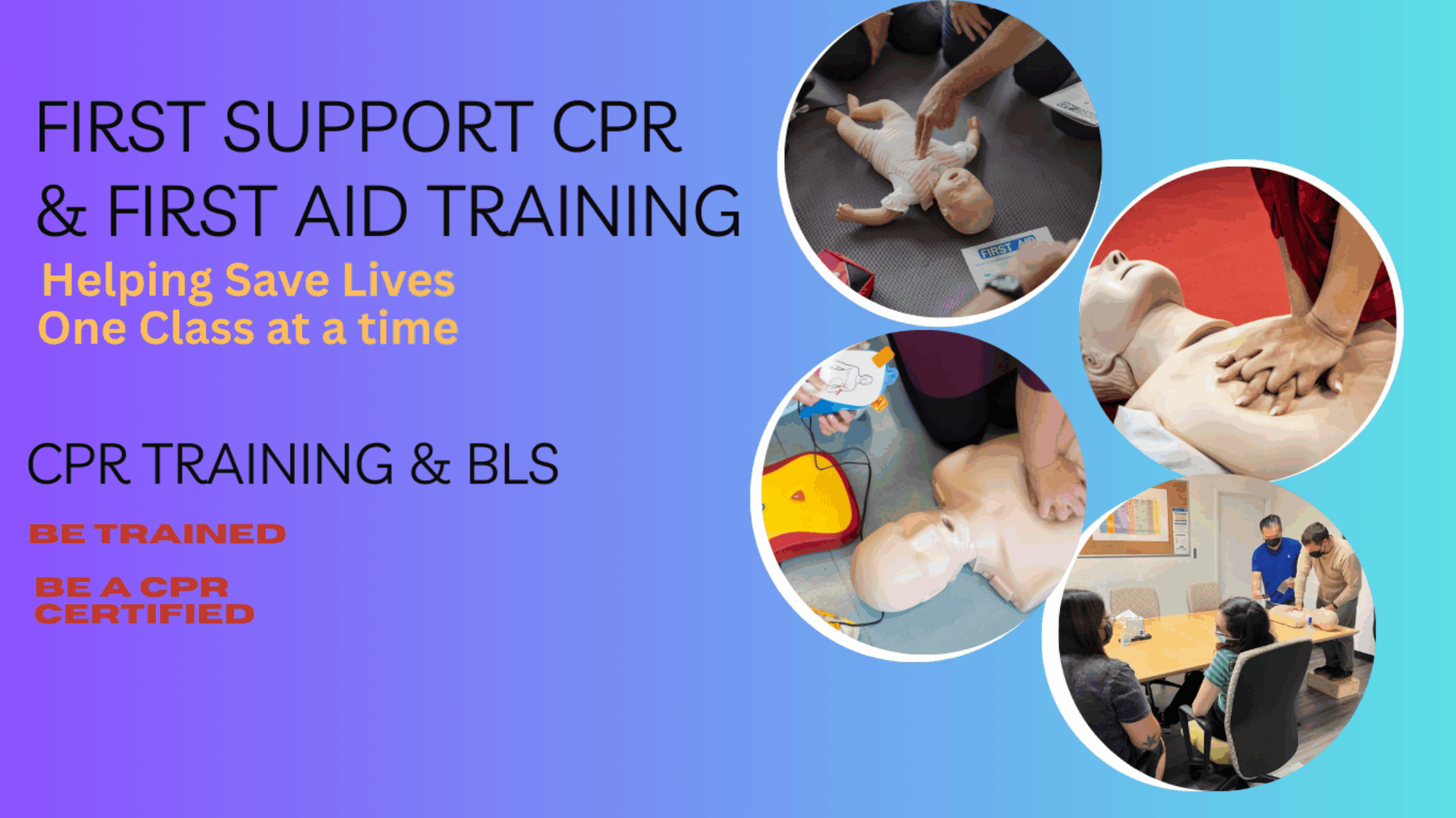
As Thanksgiving arrives, we at First Support CPR & First Aid Training want to pause, reflect, and express our deepest gratitude to the communities we proudly serve across San Jose and the Bay Area. This season is a reminder of what truly matters—family, connection, and the ability to help one another when it counts the most.

Thank You to Our Students: Everyday Heroes in Training

Whether you completed your CPR/AED class, BLS certification, First Aid course, or our hybrid online-plus-in-person training, we are incredibly grateful for your commitment. Every skill you learn has the potential to save a life. Your dedication makes workplaces safer, schools more prepared, and homes better equipped during emergencies.

Gratitude for Our Healthcare Providers

To every nurse, medical assistant, EMT, dental professional, caregiver, and healthcare worker who trained with us this year—thank you. Your willingness to stay certified, informed, and ready makes a tremendous impact in our community’s health and safety.

Appreciating Our Schools, Workplaces, and Community Partners

We extend our warmest thanks to the schools, daycare centers, corporate offices, gyms, security teams, and organizations that have trusted First Support CPR to provide their life-saving training. Your investment in safety helps build a stronger and more resilient community.

Why Thanksgiving Is a Perfect Time to Refresh Your Skills

With holiday gatherings, travel, and seasonal activities, emergencies can happen without warning. Thanksgiving is a meaningful reminder that:

  • Cardiac Arrest can happen anywhere, even at home.

  • Knowing CPR can double or triple someone’s chance of survival.

  • Quick action matters—and trained rescuers make all the difference.

If it has been a year or more since your training, now is a great time to consider a refresher.

Looking Ahead: A Safer, Stronger 2026

As we approach the end of the year, we’re excited to introduce improved training options, expanded availability, and enhanced hybrid learning experiences—making certification more accessible than ever.

Our mission remains the same:
To empower every individual, family, and organization with the knowledge and confidence to save a life.

From Our First Support CPR Family to Yours

We wish you a Thanksgiving filled with warmth, gratitude, and meaningful moments. Thank you for being part of our journey and for allowing us to be part of yours.

Stay safe. Stay prepared. Stay heart-ready. ❤️

What to Expect from CPR Training this month of July 2025: New Guidelines, Smarter Tools & Life-Saving Skills.

As we move through 2025, CPR training continues to evolve with the latest research and technology. Whether you’re a healthcare provider, a business owner, or a concerned parent, staying up to date with current CPR guidelines is essential for saving lives when it matters most.

This July, CPR courses across the country—including those offered by First Support CPR in San Jose—will be guided by updated best practices from respected organizations like the American Heart Association (AHA) and the European Resuscitation Council (ERC).

Here’s what’s new and what you can expect from your next CPR class.


🔑 Key Focus Areas in 2025 CPR Training

✅ 1. High-Quality Chest Compressions

Proper compressions are at the heart of effective CPR. Expect a strong focus on:

  • A rate of 100–120 compressions per minute

  • A depth of at least 2 inches (5 cm) in adults

  • Full chest recoil between compressions

  • Minimal interruptions during compressions

High-quality compressions improve blood flow to the brain and heart—and can significantly increase a person’s chance of survival.


✅ 2. Minimizing Interruptions

Every pause in compressions reduces the likelihood of survival.
Modern CPR training emphasizes continuous compressions, especially during transitions like rescue breaths, AED use, or team changes.


✅ 3. AED Proficiency

Automated External Defibrillators (AEDs) save lives, but only when used correctly.
Training in 2025 emphasizes:

  • Quickly locating and activating AEDs

  • Proper pad placement

  • Following voice prompts confidently

  • Resuming CPR immediately after the shock

You’ll learn to stay calm, follow instructions, and use AEDs even in high-pressure scenarios.


✅ 4. Hands-Only CPR for Bystanders

For those who aren’t medical professionals, Hands-Only CPR—chest compressions without rescue breaths—is still a key takeaway.
It’s fast, simple, and effective enough to make a difference until help arrives. This method is ideal for workplace settings, schools, and public environments.


✅ 5. Technology & Feedback Devices

Expect to see more smart mannequins and feedback tools in CPR training sessions. These help you measure:

  • Compression depth and rate

  • Hand placement accuracy

  • Breath volume (if applicable)

This ensures better skill retention and real-time correction during training.


✅ 6. Special Situations & Case-Based Scenarios

Modern CPR courses are increasingly personalized. Expect modules or add-ons addressing:

  • Drowning-related cardiac arrest

  • Hypothermia and cold water rescues

  • Opioid overdose and naloxone use

This prepares you for real-world challenges beyond textbook examples.


✅ 7. When to Stop CPR: Termination Guidelines

AHA and ERC training now includes clear guidance on when to stop resuscitation efforts, based on time, clinical signs, and professional discretion.

Cardiovascular Diseases

Overview

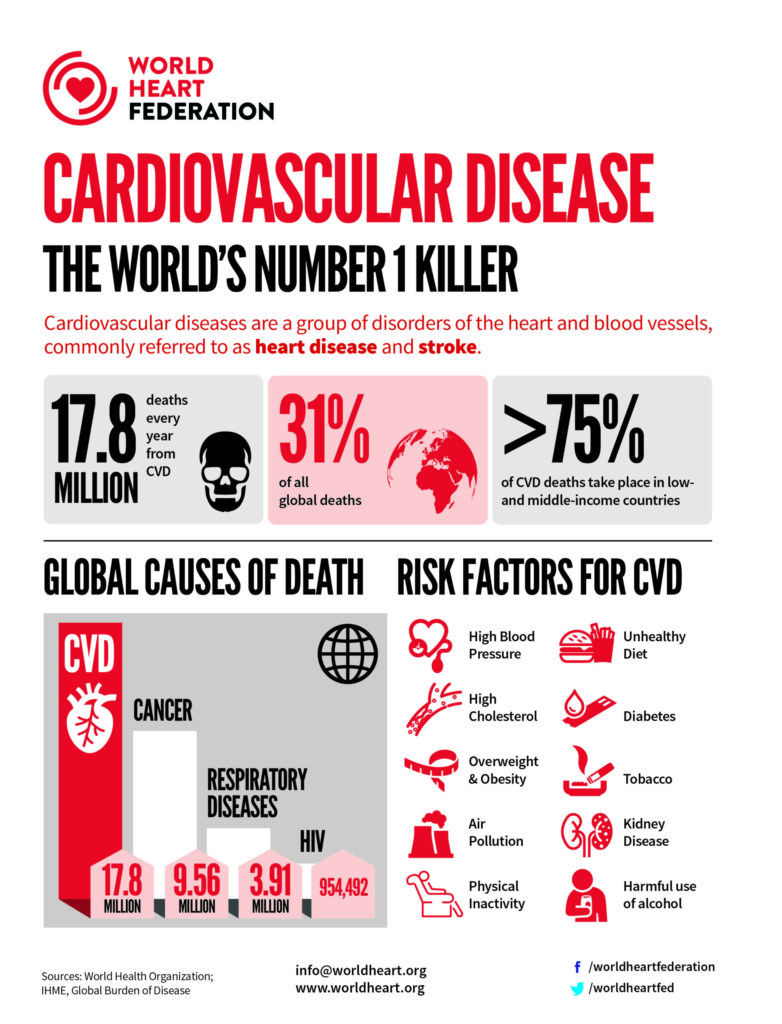
Cardiovascular diseases (CVDs) are the number 1 cause of death globally, taking an estimated 17.8 million lives each year 31% globally. 75% of CVDs death occur in low and middle income countries. 85% of all CVDs are due to heart attack and strokes. 

CVDs are a group of disorders of the heart and blood vessels and include coronary heart disease, cerebrovascular disease, rheumatic heart disease and other conditions. Four out of 5CVD deaths are due to heart attacks and strokes, and one third of these deaths occur prematurely in people under 70 years of age.

Individuals at risk of CVD may demonstrate raised blood pressure, glucose, and lipids as well as overweight and obesity. These can all be easily measured in primary care facilities. Identifying those at highest risk of CVDs and ensuring they receive appropriate treatment can prevent premature deaths. Access to essential noncommunicable disease medicines and basic health technologies in all primary health care facilities is essential to ensure that those in need receive treatment and counselling.

Symptoms

Millions of people worldwide struggle to control the risk factors that lead to cardiovascular disease, many others remain unaware that they are at high risk. A large number of heart attacks and strokes can be prevented by controlling major risk factors through lifestyle interventions and drug treatment where necessary.

The risk factors for CVD include behavioural factors, such as tobacco use, an unhealthy diet, harmful use of alcohol and inadequate physical activity, and physiological factors, including high blood pressure (hypertension), high blood cholesterol and high blood sugar or glucose which are linked to underlying social determinants and drivers, such as ageing, income and urbanization.