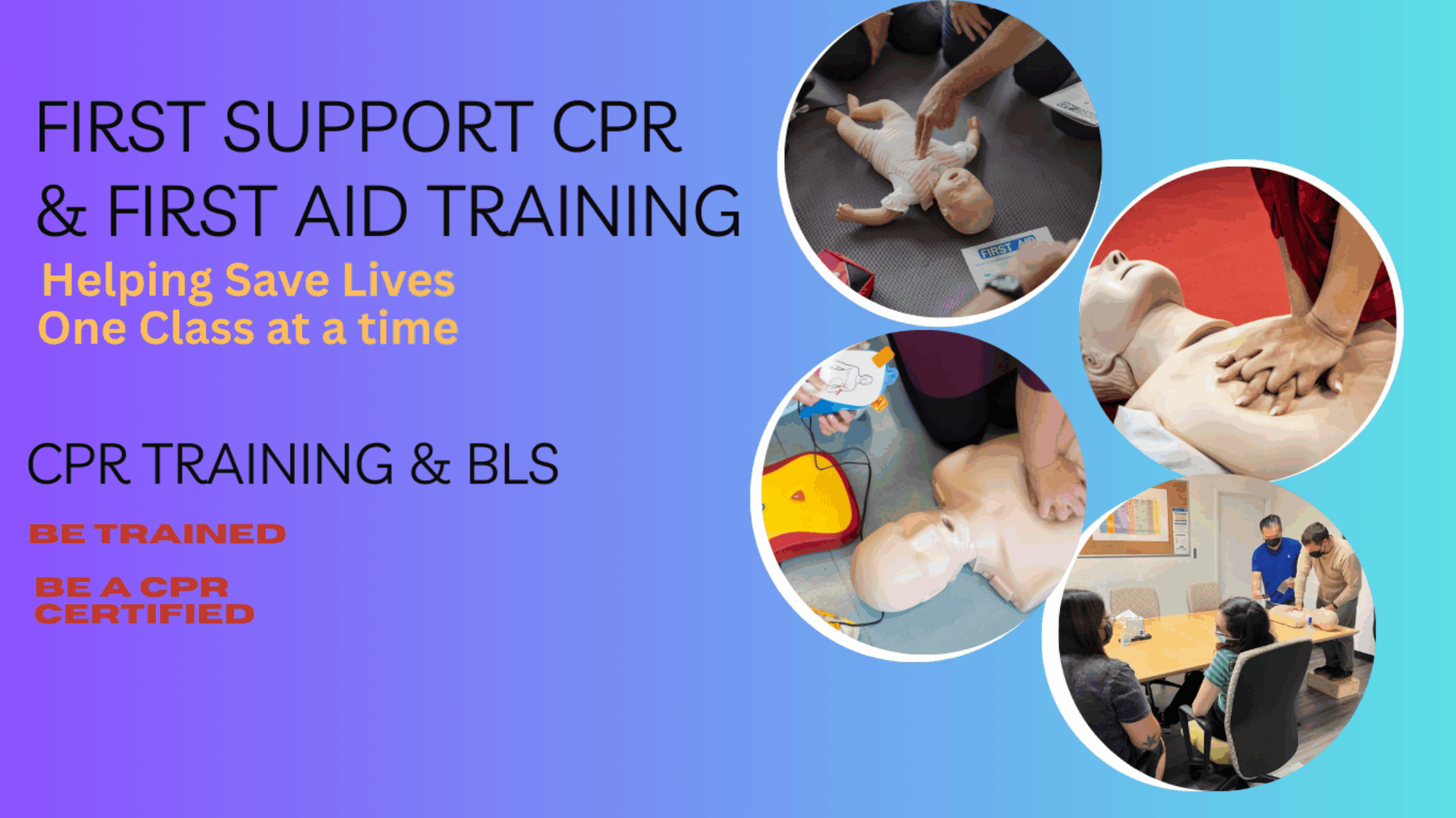
As we move through 2025, CPR training continues to evolve with the latest research and technology. Whether you’re a healthcare provider, a business owner, or a concerned parent, staying up to date with current CPR guidelines is essential for saving lives when it matters most.
This July, CPR courses across the country—including those offered by First Support CPR in San Jose—will be guided by updated best practices from respected organizations like the American Heart Association (AHA) and the European Resuscitation Council (ERC).
Here’s what’s new and what you can expect from your next CPR class.
🔑 Key Focus Areas in 2025 CPR Training
✅ 1. High-Quality Chest Compressions
Proper compressions are at the heart of effective CPR. Expect a strong focus on:
-
A rate of 100–120 compressions per minute
-
A depth of at least 2 inches (5 cm) in adults
-
Full chest recoil between compressions
-
Minimal interruptions during compressions
High-quality compressions improve blood flow to the brain and heart—and can significantly increase a person’s chance of survival.
✅ 2. Minimizing Interruptions
Every pause in compressions reduces the likelihood of survival.
Modern CPR training emphasizes continuous compressions, especially during transitions like rescue breaths, AED use, or team changes.
✅ 3. AED Proficiency
Automated External Defibrillators (AEDs) save lives, but only when used correctly.
Training in 2025 emphasizes:
-
Quickly locating and activating AEDs
-
Proper pad placement
-
Following voice prompts confidently
-
Resuming CPR immediately after the shock
You’ll learn to stay calm, follow instructions, and use AEDs even in high-pressure scenarios.
✅ 4. Hands-Only CPR for Bystanders
For those who aren’t medical professionals, Hands-Only CPR—chest compressions without rescue breaths—is still a key takeaway.
It’s fast, simple, and effective enough to make a difference until help arrives. This method is ideal for workplace settings, schools, and public environments.
✅ 5. Technology & Feedback Devices
Expect to see more smart mannequins and feedback tools in CPR training sessions. These help you measure:
-
Compression depth and rate
-
Hand placement accuracy
-
Breath volume (if applicable)
This ensures better skill retention and real-time correction during training.
✅ 6. Special Situations & Case-Based Scenarios
Modern CPR courses are increasingly personalized. Expect modules or add-ons addressing:
-
Drowning-related cardiac arrest
-
Hypothermia and cold water rescues
-
Opioid overdose and naloxone use
This prepares you for real-world challenges beyond textbook examples.
✅ 7. When to Stop CPR: Termination Guidelines
AHA and ERC training now includes clear guidance on when to stop resuscitation efforts, based on time, clinical signs, and professional discretion.